Academic Programs

Education for the Fastest-Growing Field in Accessibility & Healthcare Technology

Today's biomedical engineers operate at the intersection of engineering, technology, medicine and science to produce tomorrow's innovative technologies. There are over one billion people with disabilities or aging into disabilities worldwide. This number will double by 2050, and the professionals who answer that call will shape how the world defines independence, autonomy, and access for generations to come.

Adult students stand around a lab table talking and pointing at a box in the middle

Department of Biomedical Engineering

The Department of Biomedical Engineering (new tab) offers undergraduate and graduate coursework focused on research, design and engineering of technology solutions for health, independence, engagement and participation for people of all abilities. Classroom education is paired with hands-on clinical, research and engineering opportunities.

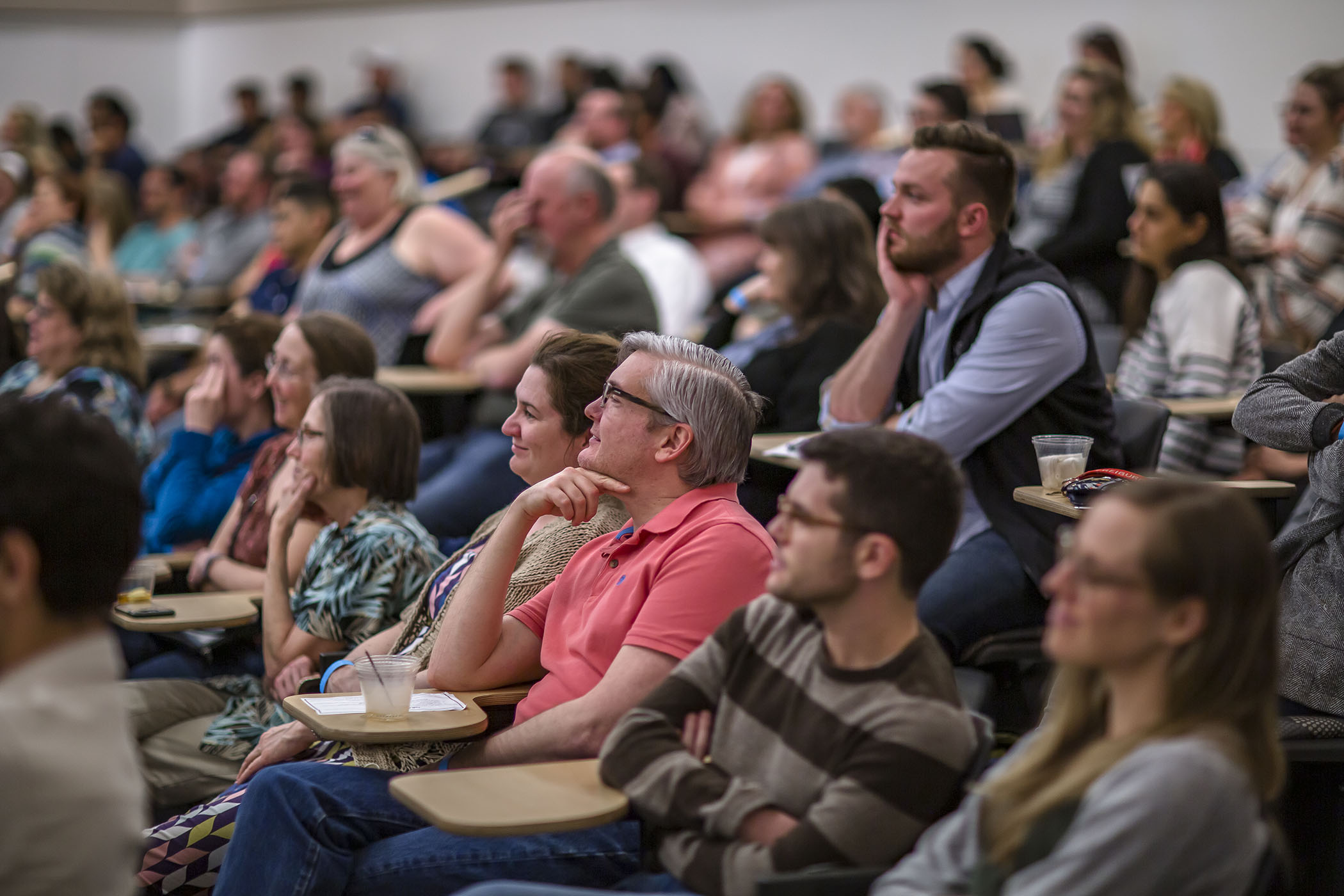
Adult learners paying attention in a lecture.

Biomedical Engineering BS

Go to BS Program Page
Adult learner focuses ahead while sitting at a desk.

Biomedical Engineering MS

Go to MS Program Page
Two young women work together at a table with a laptop.

Biomedical Engineering PhD

Go to PhD Program Page

Assistive Technology Track

The Assistive Technology and Inclusive Engineering graduate certificate provides an in-depth introduction to the area of supportive and assistive technologies for individuals aspiring to either work in the field of technology, disability, and/or aging into disability; and/or to sit for the national RESNA credentialing examination for one of two certifications to recognize assistive technology service providers who have met a national standard of job-based knowledge and experience. Learn more about this certificate at CU Biomedical Engineering Certificate Programs.

Course Information

Rehabilitation and Assistive Technology

BIOE 4057 / 5057

This course provides students with an overview of technologies and their use by and for persons with disabilities.

Anatomy, Physiology, and Medical Terminology for Bioengineers

BIOE 5420XX

This course provides a broad overview of human anatomy, physiology, and medical terminology for the Bioengineer.

Introduction to Device Design for Disability and Aging: Human Factors

BIOE 4058 / 5058

The application of bioengineering principles for persons living with functional impairment(s) across the lifespan.

Mechatronics & Embedded Systems for Bioengineering

BIOE 4039 / 5039

The course focuses on the design and construction of microprocessor-controlled electro-mechanical systems.

Human Factors and Usability Testing for Bioengineers

BIOE 4067 / 5067

This course provides an introduction to human factors testing and evaluation in the context of medical and assistive technology (AT).

Human Factors and Usability Testing for Bioengineers

BIOE 4067 / 5067

This course provides an introduction to human factors testing and evaluation in the context of medical and assistive technology (AT).

This course provides students with an overview of assistive technologies and their use for people with disabilities, and for those aging into disability. Students will attain hands-on experience with existing technologies in the areas of seating and wheeled mobility, hearing and vision loss, cognitive impairments, environmental controls/smart home automation, augmentative and alternative communication, artificial intelligence, and access to computers. Students will work in teams to solicit device requirements from a client with assistive technology needs and develop a phase one prototype device.

  1. Have a basic understanding of disability categories and conditions, biomechanics, and assistive technologies.
  2. Compare and contrast the benefits and risks of existing and emerging assistive technologies.
  3. Analyze design constraints for a variety of disability categories.
  4. Evaluate user interfaces.
  5. Develop low-tech assistive technology prototype device for a specific disability/condition.

Becky Breaux, PhD

This course introduces the topic of disability and aging and the application of biomedical engineering principles for persons living with functional impairment(s) across the lifespan. Topics include body structure and function for persons with congenital, degenerative and acquired disabilities; the impact of contextual factors and environment; technology and the human interface. The course will focus on human factors of disability and aging, use case development; product design considerations for persons with disabilities and/or aging and transdisciplinary approaches to the application of technology across multiple environments.

  1. Design assistive systems, components, or processes that address real-world needs of individuals with disabilities and older adults, considering usability, safety, and human factors.
  2. Develop and communicate use cases that capture user needs, environmental context, and functional requirements, effectively presenting design solutions to diverse audiences.
  3. Collaborate effectively in multidisciplinary teams to generate, evaluate, and refine design concepts for assistive technologies across different application settings.
  4. Utilize modern engineering tools and professional practices, incorporating ethical considerations, user-centered design, and contextual factors in the development of assistive technologies.

Ismael Sanchez Osorio, PhD

This course provides an introduction to human factors testing and evaluation in the context of commercial products and assistive technology (AT). Particular focus will be given towards designing and applying usability testing to inform product refinement and validation, as well as special considerations when involving populations of advanced age and/or with disabilities. Topics include general human factor considerations, usability techniques, and user experience data collection and interpretation.

  1. Understand the taxonomy of human factor assessment techniques and the circumstances under which each should be employed.
  2. Integrate considerations for individuals with advanced age/disabilities when planning usability studies and other human factor assessments.
  3. Plan and perform a contextual inquiry, cognitive walkthrough, or heuristic evaluation, as well as interpret the resultant data.
  4. Design a usability study for medical or AT devices that directly supports CIDE with pilot data.
  5. Develop and administer test plans and materials for usability studies.
  6. Moderate and observe usability testing sessions.
  7. Analyze mixed-methods usability data on user performance and satisfaction.
  8. Classify and prioritize usability issues for optimal dissemination to development/design teams.
  9. Report findings of human factors assessments in a systematic and compelling format.

Morris Huang, PhD

This course provides students with an overview of anatomy, physiology, and medical terminology with a focus on disease, disability, and aging. Clinical application activities offer students opportunities to integrate learning into real-world scenarios for a better understanding of human disease and disability and the potential benefits of medical devices and assistive technologies. Students will also have hands-on learning activities that facilitate the application of engineering principles to human body systems.

  1. Demonstrate a basic understanding of Latin root words, suffixes, and prefixes in the use of medical terminology for biotechnology design.
  2. Demonstrate a basic understanding of human anatomy and human physiology to develop foundational concepts for biomedical engineering.
  3. Discuss and present case study examples, with a focus on the use of medical devices or assistive technology, while integrating principles of medical terminology, anatomy and physiology appropriately.
  4. Apply, compare, and contrast principles of engineering to human physiological systems through hands-on lab activities.

Becky Breaux, PhD

Claire Simpson, MS, OTR/L

The purpose of this course is to teach you the skills necessary to control and communicate with devices using microcontrollers and embedded systems. Lectures will cover material related to electronics and microcontrollers at a relatively high level. Hands-on lab sessions will reinforce the lectures and allow you to learn-by-doing. You will specifically apply your skills to solve problems in your own work and hobbies.

  1. Understand and design mechatronic systems, and be able to identify critical components and analyze their function.
  2. Control mechanical devices using a microcontroller.
  3. Select an appropriate sensor, implement its interface with a microcontroller, and use its data in a negative feedback control loop.
  4. Apply learned skills to the design of a mechatronic system that addresses a problem in their own work/hobbies.
  5. Communicate intelligently with collaborators and provide valuable input when working on electro-mechanical projects.

Morris Huang, PhD

The Clinical Experiences course reflects a culmination of the didactic and laboratory coursework taken during the certificate program. Students will participate in a semester-long clinical experiences internship/externship focused on direct engagement and understanding of user-centered clinical and inclusive engineering design and fabrication principles. For a three-credit course, students will spend 240 hours of direct engagement at either a clinical or industry-related fieldwork site.

  1. Perform a client chart review and interview or complete a user persona profile.
  2. Assist site supervisor with equipment selection, prescription, and/or design.
  3. Assist site supervisor with equipment set-up, programming, adjustment, or modification.
  4. Provide product demonstrations for assistive technologies.
  5. Provide training in the use of assistive technologies.
  6. Research product options and present results.

Becky Breaux, PhD

Can't find what you're looking for?

We're here to help connect you with the right resources and expertise for your needs

CMS Login