Field Research

Addressing Real Human Problems Encountered in the Field​

Field Research aims to better understand how technology devices and services impact people with disabilities and older adults in their environments, and identify practical solutions for improving their design, use, and provision.

A person with downs syndrome cleans carrots at a sink

Research Areas

Innovative Technologies for People with Cerebral Palsy: An Exploratory Study of Dynamic Wheelchair Seating and User Perceptions​

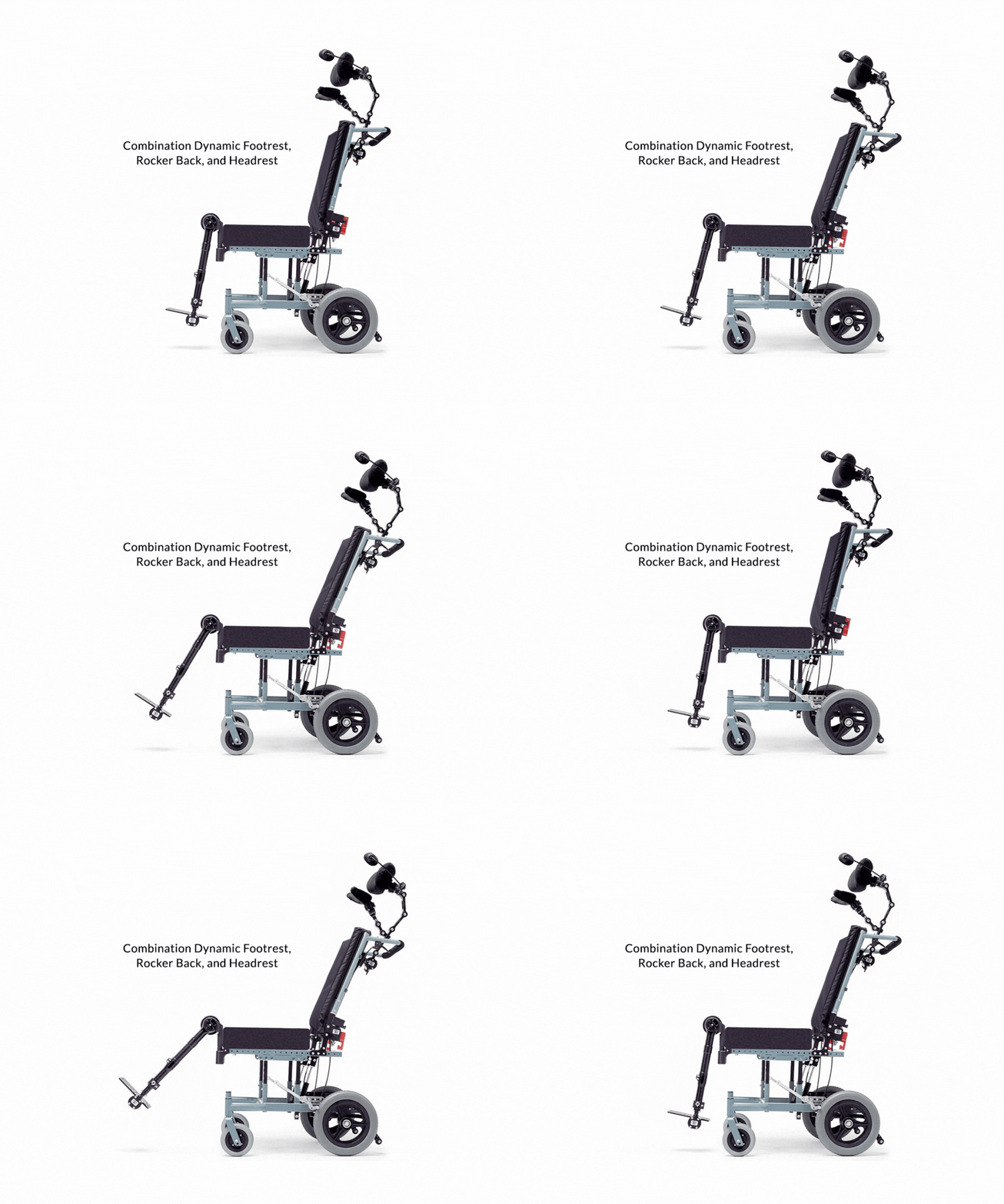
Combination Dynamic Foodrest, Rocker Back, and Headrest
Principal Researchers: Becky Breaux, PhD Others Involved: Michelle Lange, OTR/L, ATP/SMS
and Sarah Walker, MS
Student Researchers: Kumari Kanchan Funding: Funded by the National Institute on Disability, Independent Living, and Rehabilitation Research (NIDILRR grant number 90SFGE0077). NIDILRR is a Center within the Administration for Community Living (ACL), Department of Health and Human Services (HHS). ​

Some people with cerebral palsy (CP) have repetitive or involuntary body movements that cause them to push against their seating supports with significant force. In some cases, these movements cause injuries to the user or damage the wheelchair. Dynamic seating systems reduce the risks of injury or equipment damage by moving when the person moves and then helping them return to their original sitting position. This study uses an online survey and interviews to investigate who is using dynamic seating, how they use it, and their views about its impact on their lives to inform policy and practice.​ (Photo courtesy of Seating Dynamics). 

More Information: Download the Abstract (pdf) Contact Information: For more information, contact Becky Breaux at becky.breaux@ucdenver.edu​

Feasibility of Multi-Modal Sensor and Video Technologies to Characterize Caregiver Nighttime Interventions and Sleep Behaviors in Children and Young Adults with Cerebral Palsy

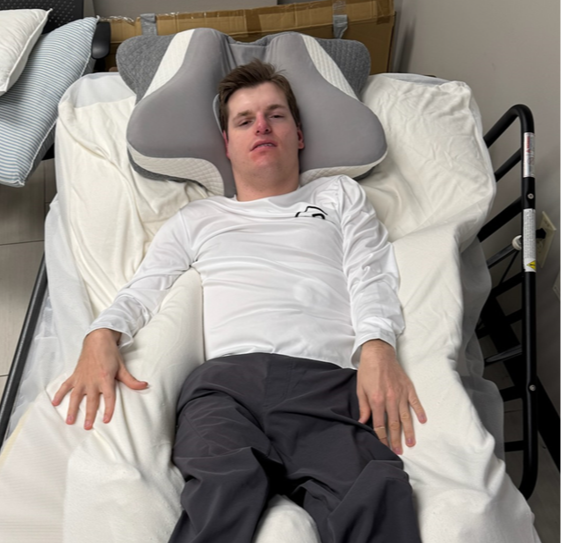
A young adult lays supported by clinically molded foam supports.
Principal Researchers: Becky Breaux, PhD Student Researchers: Saron Solomon, BS

This purpose of this research is to determine whether it is possible to use common sensors and video tools to track how children with cerebral palsy sleep and how their caregivers help them during the night. These children may benefit from special equipment that helps with their body position while lying down, also known as Lying Postural Care Management (LPCM) technologies. The goal is to see if this tracking method works well, so it can be used in future research to understand how this equipment affects sleep and caregiver interventions.

Contact Information: For more information, contact Becky Breaux at becky.breaux@ucdenver.edu​

Person-centered care in the provision of Complex Rehabilitation Technologies (CRT)

A CIDE clinician works closely with a client and a wheelchair supplier to design a chair that fits the person's needs and preferences.
Principal Researchers: Becky Breaux, PhD

The purpose of this study is to understand how clients, caregivers, and healthcare providers experience person- centered care (PCC). PCC focuses on encouraging client choice and individuality, team decision making, and effective communication. For two years, data was collected at a seating and wheeled mobility clinic in Colorado where complex rehabilitation technologies are provided through extensive observations, interviews, and participation at the study site. Ongoing data analysis is being completed to better understand what helps or gets in the way of providing PCC, explore the impact of PCC services on clients and service providers, and suggest ways to improve PCC in practice and through policy reforms. ​

More Information: Abstract and dissertation Contact Information: For more information, contact Becky Breaux at becky.breaux@ucdenver.edu​

Center for Innovative Design and Engineering (CIDE)

CU Denver

The Hub, Bioengineering

1224 5th Street

Suite 130

Denver, CO 80204


303-315-1280

CMS Login