Product Testing

Informing Design and Validating Products​​

Researchers take a user-centered approach, engaging people of all abilities to test assistive, mainstream, and healthcare technologies. The results inform consumers, clinicians and manufacturers about product design, development, and validation. ​

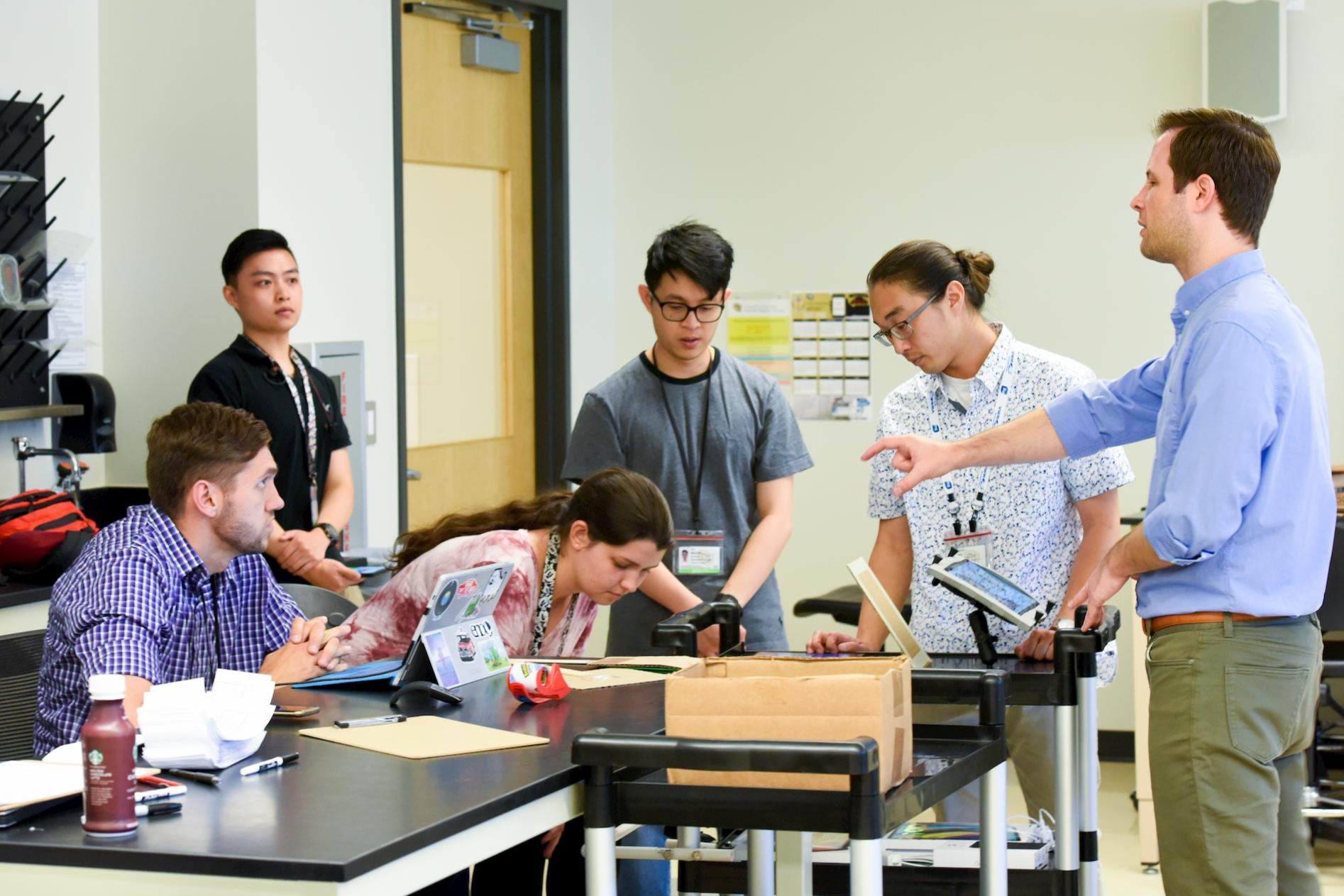
Adult students stand around a lab table talking and pointing at a box in the middle

Research Areas

GOALS: Goal Oriented Automated Learning System

Principal Researchers: Steve Sutter (CreateAbility, Inc) Others Involved: Morris Huang, PhD
Leslie Emery, MS
Funding: Funded by the National Institute on Disability, Independent Living, and Rehabilitation Research (NIDILRR grant number 90BISA0075). NIDILRR is a Center within the Administration for Community Living (ACL), Department of Health and Human Services (HHS). ​

This SBIR Phase 1 project focused on helping employees with intellectual disabilities (EwIDs) succeed at work while supporting their employers and job coaches. Usually, employers assign job tasks, and job coaches spend significant time creating and updating detailed, step-by-step instructions for tasks, often with accompanying pictures. The Goal Oriented Automated Learning System (GOALS), developed by CreateAbility Inc. (Indianapolis, IN), makes this easier by letting coaches quickly generate detailed instructions with AI-generated images based on an EwID’s skill assessments. The CIDE team contributed to informing and refining the design for GOALS, via focus groups and usability testing, respectively, which included employers, job coaches, and EwIDs.​

More Information: Download the Abstract Contact Information: For more information, contact Morris Huang at morris.huang@cuanschutz.edu.

Pinpoint (Point-It-Out)​

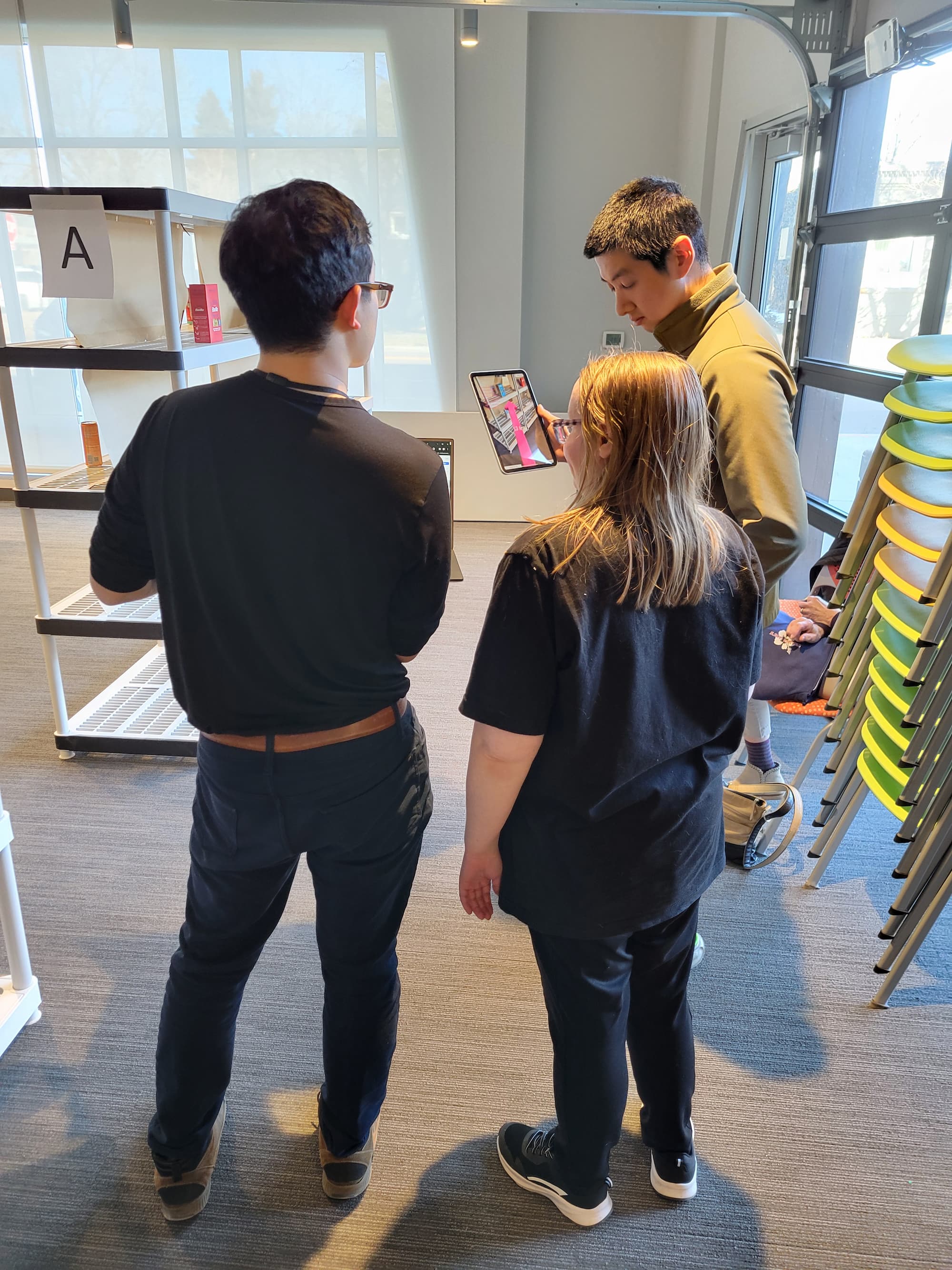
Researcher assists a participant with an intellectual disability in testing the PinPoint augmented reality app on an iPad in a mock store setting.
Principal Researchers: Bing Han, PhD Others Involved: Morris Huang, PhD; Kendall Hunter, PhD; Caroline Clevenger, PhD; Sarah Walker, MS Student Researchers: John (Jack) Lueck, BS; Ryan Adams, BS; Sawyer Kitching, BS Funding: Funded by the Coleman Institute for Cognitive Disabilities (Technology Translational Research and Development Award) and the Colorado Office of Economic Development and International Trade (Advanced Industry Proof of Concept Award).

This project focuses on improving independence for people with intellectual and developmental disabilities (IDD) who have difficulty navigating various non-residential indoor environments essential to daily living. An augmented reality (AR) app, PinPoint, was developed collaboratively with principal investigator Dr. Bing Han to provide an IDD-friendly indoor navigation support. Pilot testing with nine individuals with IDD in a mock grocery store indicated that PinPoint users could find grocery items successfully 96.3% of the time. Pilot study results have also informed improvements to PinPoint, and have demonstrated the potential utility of AR assistive technology for IDD populations. This project will next evaluate the refined PinPoint app with focus groups and in commercial store settings.​

More Information: Download the Abstract Contact Information: For more information, contact Morris Huang at morris.huang@cuanschutz.edu

Rideshare for Older Adults

A student researcher and an older adult study participant enjoy ice cream together after completing a rideshare usability test.
Principal Researchers: Morris Huang, PhD Faculty Advisor: Cathy Bodine, PhD Funding: Funded in part by the CU Denver Center for Excellence in Teaching and Learning (Teaching Enhancement Grant).

This project centers on improving the experience of older adults using rideshare apps like Uber and Lyft. Being able to get around is important for independence, especially for older adults who can’t or don’t want to drive or use public transit anymore. However, using rideshare apps can present challenges for older individuals who struggle with using digital technology. To better understand these challenges, a student research team tested the Uber app by having six residents (75+ years old) at Kavod Senior Life attempt to book Uber rides to a nearby ice cream shop. Findings indicate several usability issues with the Uber app that prevent older adults from becoming users, despite the significant benefit of rideshare services being covered by Medicare in various states like Colorado.

More Information: Download the Abstract Contact Information: For more information, contact Morris Huang at morris.huang@cuanschutz.edu

Person-centered care in the provision of Complex Rehabilitation Technologies (CRT)

The purpose of this study is to understand how clients, caregivers, and healthcare providers experience person- centered care (PCC). PCC focuses on encouraging client choice and individuality, team decision- making, and effective communication. For two years, data was collected at a seating and wheeled mobility clinic in Colorado where complex rehabilitation technologies are provided through extensive observations, interviews, and participation at the study site. Ongoing data analysis is being completed to better understand what helps or gets in the way of providing PCC, explore the impact of PCC services on clients and service providers, and suggest ways to improve PCC in practice and through policy reforms. ​

For more information, contact Becky Breaux at becky.breaux@ucdenver.edu.

Abstract and dissertation for Dynamic Wheelchair Seating and User Perceptions

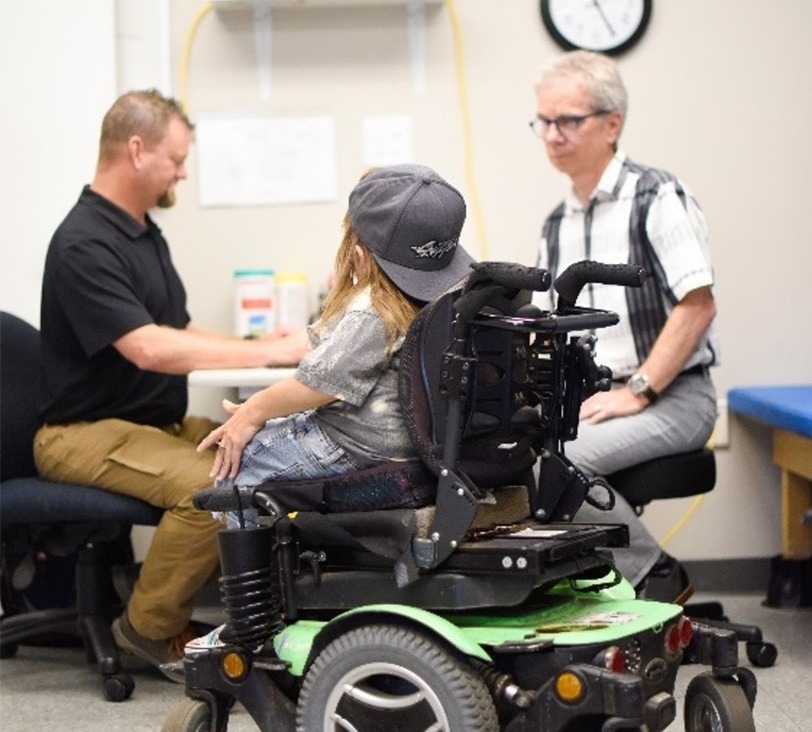
A CIDE clinician works closely with a client and a wheelchair supplier to design a chair that fits the person's needs and preferences.

Funded by

Center for Innovative Design and Engineering (CIDE)

CU Denver

The Hub, Bioengineering

1224 5th Street

Suite 130

Denver, CO 80204


303-315-1280

CMS Login